 Order Automatica
Beginner's Guide
Dark Tactical Roguelite Auto-Battler · 3×3 Ritual Grid
Core Loop
Each round you place units on the 3×3 grid and combat resolves automatically; win to gain new units and items, building deeper synergy chains. Lose and you restart (roguelite).

Beginner FAQ
Is Order Automatica good for beginners?
Yes. Battles are automated, so the skill is in setup, not reflexes. Play the free Demo first, then follow this guide section by section.
What should I focus on first?
Keep a durable unit in the front row, and commit to one Indulgence (buff) theme rather than collecting random strong units. Scaling one buff beats spreading stats.
How do I win more fights?
Two levers: unit synergy from adjacent placement, and tile positioning. Trigger conditions matter more than raw attack numbers — check them before buying.
Where do I find ready-made builds?
The Best Builds page collects community-tested compositions as the meta settles after launch.
Positioning: Front / Mid / Back Row
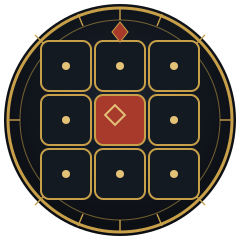
The three rows of the grid map to front, mid and back rows. Different units play different roles per row: front row tends to be damage-soaking / trigger units, back row tends to be damage / buff units. Consider who gets hit first and who acts first.
Source: GAMESCENSOR Beginner's Guide.
Synergy
Adjacent units can trigger synergy effects — placing units with synergy relationships next to each other amplifies power. Understanding unit synergy is the key to strong compositions. See Unit Synergy. Source: GAMESCENSOR Beginner's Guide.
3 Tips for New Players
- Always keep a unit in front so back-row cores aren't sniped.
- Build around one Indulgence (buff) theme rather than grabbing random strong units.
- Use the Demo to experiment freely with no pressure — learn the systems cheaply.
Source: GAMESCENSOR Beginner's Guide.
Systems Beginners Miss (revealed by the achievement list)
The game's own achievement conditions reveal more about its systems than any store blurb. These are real conditions recovered from the demo client, and each one points at a mechanic that most new players overlook in their first runs:
| Achievement condition | What it tells you about the game |
|---|---|
| Deal damage during the prep phase | Damage is not confined to the battle — some effects fire while you are still setting up |
| Discard a unit carrying 2 items | A unit can hold two items, and discarding is a real decision rather than just a sale |
| Redraw 3 times in one shop | The shop can be rerolled repeatedly inside a single visit |
| Buy 3 cell effects in one run | Grid tile effects are purchasable, not merely random drops |
| Reach +99 buff on a unit | Buffs stack to very high values — scaling, not flat stats, is the win condition |
| Hold 15 essence at once | Sitting on essence is a viable line, so resist spending every coin every turn |
| Win a battle with every unit at 100% HP | A flawless run is possible, so prevention builds are viable, not just high damage |
Two of these change how a beginner should play immediately: hoarding essence is a strategy, not stinginess, and stacking buffs on one unit beats spreading stats across the board. Both point the same way — pick a lane early and commit to it.
Conditions recovered from the demo client (AppID 2577030); exact in-game wording may differ at launch. Full list on the Achievements page.
Five Mistakes That Cost Beginners Runs
- Leaving the front row thin. Battles resolve on their own, so a back line that gets reached before it fires is a back line that never existed. Put something durable in front first, always.
- Buying stats instead of effects. With most units costing the same 3 essence, price rarely separates them — abilities do. Check the trigger condition before the attack number.
- Ignoring the tile under the unit. There are 18 tile effects and some are actively harmful (there is one that kills the unit standing on it at the start of battle). Placement is a decision, not a formality — see Grid Placement.
- Rerolling for one specific unit. The shop can be rerolled repeatedly, which makes chasing a named unit a reliable way to burn the essence the achievements suggest you should be holding. Build with what shows up.
- Forgetting the candles. Snuffing a candle makes enemies stronger. A slow build that wins every fight can still lose the run to the timer, so closing speed matters as much as survivability.
Unit pricing and tile-effect counts recovered from the demo client; candle and auto-battle behaviour per Steam Store Page · GAMESCENSOR Beginner's Guide.
Advanced Progression (Beyond the Basics)
Once the fundamentals hold, wins come from economy and scaling rather than individual fights:
- Hoarding essence is a strategy. The achievement list shows you can sit on 15 essence at once — resist spending every coin every turn; bank for a pivotal pickup (see Achievements).
- Stack one buff lane to +99. Buffs scale far higher than flat stats, so committing to a single buff theme out-performs spreading stats across the board.
- Discipline your rerolls. The shop rerolls repeatedly, which makes chasing one named unit a reliable way to burn the essence you should be holding — build with what appears.
- Plan for deeper tiers. The ritual escalates, so design your comp to stay relevant late — see Difficulty & Team Advice.
A First Run, Step by Step
If you would rather follow a concrete sequence than read principles, this is the walkthrough we suggest for a first attempt. It assumes no prior knowledge and works entirely inside the free demo, which runs the near-final build.
- Read the board before you place anything. The 3×3 ritual grid is your only real input: each cell can carry an effect, and where a unit stands decides which triggers fire. Spend your first moments reading the tiles rather than hunting for the “best” unit. The grid & tile-effects primer maps every cell type so you know what a placement will do before you commit it.
- Draft by role, then position. Cover the four roles — frontline, control, damage, sustain — before chasing a favourite unit, then place so triggers overlap: front line where it engages first, support behind it. This is the same framework the Team Comps page builds ready-made rosters from.
- Chain triggers rather than sprinkling effects. Buffs multiply while flat stats only add, so build one complete synergy chain instead of spreading small bonuses across the board.
- Respect the candle race. Every candle you snuff out powers up the enemies, so lean on control and sustain early and close with damage — a board that wins every fight slowly can still lose the run. The difficulty & team adjustment guide explains how the ritual escalates by rank.
These four steps are the whole game in miniature; everything else on this wiki is detail layered on top of them.
Start Here — Your First Ritual
New to the 3×3 Ritual Grid? Follow this path from first launch to your first clean run.